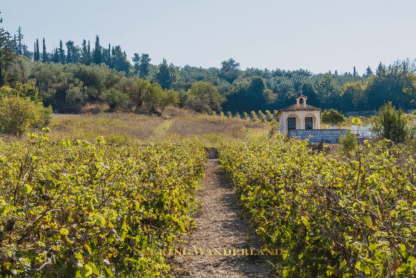





Greece has always been a destination shaped by the table.
Not simply by food itself, but by the culture surrounding it: long lunches beside the sea, recipes passed through generations, wine poured generously without asking, village bakeries before sunrise, island feasts stretching late into the evening, and ingredients that still taste deeply connected to the land they come from.
Beyond the famous beaches and whitewashed villages, Greece reveals itself through its culinary identity; one that changes dramatically from region to region.
Every island, mountain village, vineyard, and coastal town carries its own flavors, traditions, products, and stories.
For travelers who experience a destination through gastronomy, wine, culture, and atmosphere, Greece offers one of the richest culinary landscapes in the Mediterranean.
Here are some of the most remarkable gastronomy destinations in Greece for travelers seeking a more refined and authentic way to explore the country.

1. Naxos — The Island of Cheese, Potatoes & Mountain Villages
Naxos carries a version of Greece that feels increasingly rare and is often described as one of Greece’s best-kept culinary secrets.
Unlike many Cycladic islands, Naxos remains deeply connected to agriculture, seasonality, and village life. The island’s fertile landscape creates an entirely different culinary identity from its neighboring islands; greener, richer, and more grounded in local production, producing some of the country’s finest dairy products, meats, potatoes, olive oil, and local spirits.
Here, gastronomy is not curated for visitors.
It is simply part of everyday life.
The island is especially known for:
- Graviera Naxou cheese
- Traditional mountain-raised meats
- Kitron liqueur
- Village tavernas with farm-to-table traditions
What makes this island special is the balance between rugged mountain authenticity and elegant island atmosphere. Long lunches in stone villages, family-run tavernas, and local cheese tastings create an experience that feels deeply rooted in tradition.
For travelers seeking a slower and more meaningful version of the Cyclades, Naxos offers one of Greece’s richest culinary scenes.
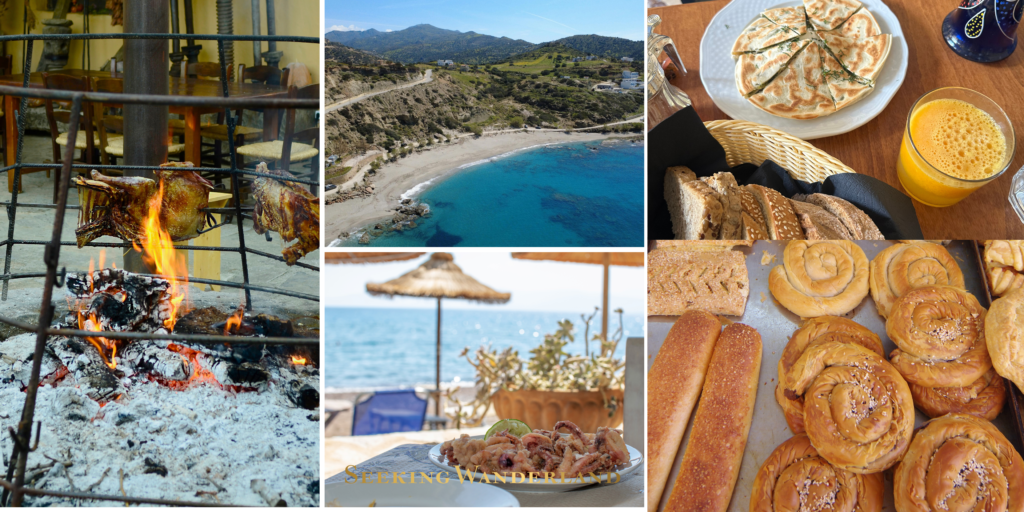
2. Crete — A Culinary Culture Shaped by Land, Ritual & Longevity
Crete is one of the few places in Europe where food still feels inseparable from the land itself.
The island’s gastronomy is not driven by trends or presentation, but by centuries of survival, seasonality, mountain living, and community traditions. Meals unfold slowly here. Ingredients are hyper-local. Hospitality feels instinctive rather than performative.
Wild herbs gathered from the mountains, olive oil produced by generations of the same family, cheeses aged in village caves, slow-cooked meats, handmade pies, fresh seafood, and ancient wine traditions all coexist naturally within daily life.
But what makes Crete especially powerful is the feeling surrounding the table.
Meals are rarely rushed.
Conversations linger.
Wine appears continuously.
And guests are treated less like customers and more like participants in local life.
The island also carries a deeply sensory landscape; dramatic gorges, vineyards, mountain villages, olive groves, and hidden beaches that naturally lend themselves to wellness, gastronomy, and slower travel experiences.
Crete does not simply feed you.
It absorbs you into its rhythm.
Crete is not simply a destination for food lovers.
It is an entire philosophy of living.
The famous Cretan diet is considered one of the healthiest in the world, yet meals here remain deeply indulgent and soulful.
From winery picnics and village feasts to olive harvest experiences and seaside seafood lunches, Crete offers one of the most delicious gastronomic backgrounds in Europea and the world.

3. Aegina — Pistachios, Seaside Simplicity & Old-World Island Charm
Very close to Athens, the Saronic island of Aegina offers an entirely different pace of life.
Known internationally for its exceptional pistachios, the island feels wonderfully understated compared to many Greek islands. Neoclassical houses, fishing boats, pistachio groves, old cafés, and small seaside tavernas create a nostalgic atmosphere that feels timeless.
The island’s volcanic soil and climate create pistachios with remarkable sweetness and intensity, protected under PDO status.
Food here reflects simplicity at its best.
Fresh seafood arrives directly from local boats. Pistachios appear in pastries, desserts, liqueurs, and local products. Long lunches by the water become the centerpiece of the day.
What makes Aegina particularly special is its accessibility combined with authenticity. It remains deeply Greek in atmosphere while offering a softer, more relaxed island experience just a short distance from Athens.
For gastronomy travelers, it represents the beauty of simplicity done exceptionally well.

4. Tinos — The Refined Soul of the Cyclades
Tinos feels like the Cyclades before they became overly curated.
The island has quietly emerged as one of Greece’s most sophisticated gastronomy destinations, attracting travelers seeking authenticity, craftsmanship, and understated luxury.
Its culinary identity is deeply tied to the land:
artisan cheeses, mountain herbs, cured meats, handmade breads, local wines, and recipes rooted in village traditions.
But Tinos is equally about atmosphere.
Tiny marble villages, artistic heritage, dramatic landscapes, hidden tavernas, and creative contemporary restaurants coexist beautifully together. There is refinement here, but without excess.
The island attracts a different kind of traveler:
those seeking depth rather than nightlife, atmosphere rather than spectacle.
Meals often unfold in quiet courtyards, mountain villages, or elegant farm settings where local ingredients become part of a broader story about place, identity, and tradition.
The island combines Cycladic elegance with deeply agricultural traditions. Tinos feels deeply creative, deeply Greek, and deeply personal.

5. Syros — Neoclassical Elegance & Sweet Cycladic Traditions
Syros offers one of the most elegant and culturally layered culinary identities in the Cyclades.
Unlike the whitewashed minimalism often associated with the islands, Syros feels refined, aristocratic, and deeply authentic. The island’s neoclassical capital, Ermoupoli, carries a grandeur shaped by Venetian, Ottoman, and maritime influences, which naturally extends into its gastronomy.
Syros is especially known for its confectionery traditions.
The island’s famous loukoumi and halvadopita have become iconic across Greece, while traditional almond sweets (amygdalota) reflect the refined pastry culture that developed through generations of trade and cultural exchange.
But beyond sweets, Syros offers a deeply atmospheric dining scene:
elegant cafés beneath neoclassical mansions, small family tavernas by the sea, local cheeses and cured meats, and recipes that combine Cycladic simplicity with richer island influences.
There is a quiet sophistication to Syros that appeals strongly to travelers seeking culture, gastronomy, and authenticity without excess.
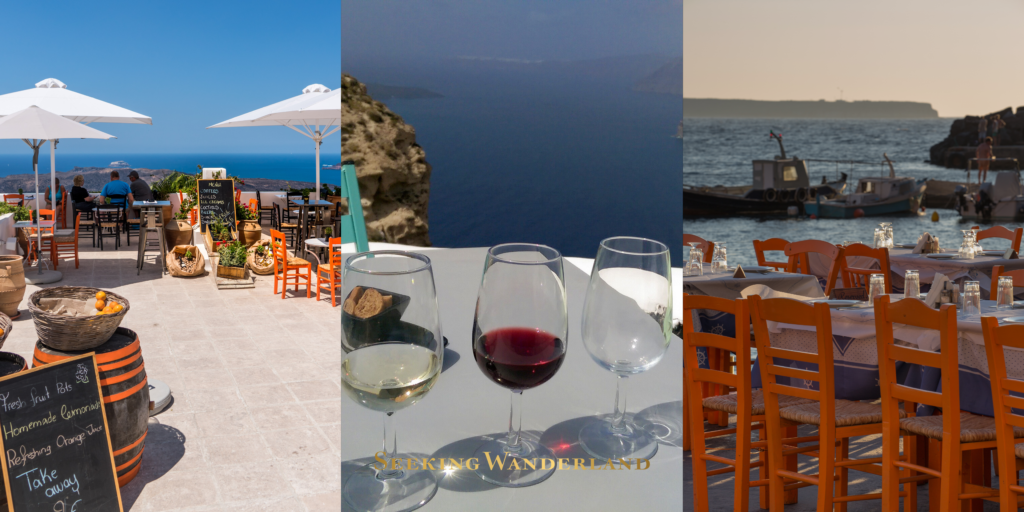
6. Santorini — Volcanic Elegance & Wine Culture Above the Aegean
Santorini’s gastronomy is shaped entirely by its volcanic landscape.
Everything here feels intensified by the island’s dramatic terroir; the mineral-driven wines, concentrated cherry tomatoes, white eggplants, capers, and fava all carry the imprint of the volcanic soil and harsh island climate.
Wine culture lies at the center of Santorini’s identity.
Ancient basket-trained vineyards stretch across black volcanic earth while wineries overlook the caldera in settings that feel almost cinematic. Tastings here are not simply about wine itself, but about understanding how geography, climate, and history create one of the Mediterranean’s most distinctive wine regions.
Yet beyond the luxury and beauty, Santorini also offers moments of remarkable simplicity:
sunset seafood dinners beside the water, family-run tavernas hidden away from the caldera crowds, quiet mornings in traditional villages, and long lunches beneath the island sun.
The experience becomes a balance between dramatic beauty and sensory depth.
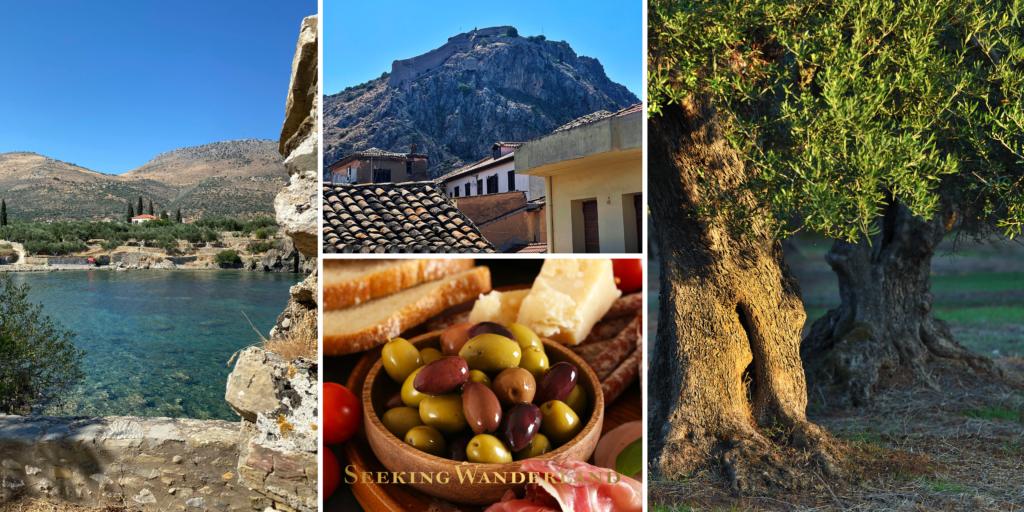
7. The Peloponnese — Olive Oil, Vineyards & Rural Authenticity
The Peloponnese reveals a version of Greece that feels expansive, grounded, and deeply connected to the mainland.
Here, gastronomy is shaped by mountains, vineyards, olive groves, citrus farms, and centuries of rural tradition. The region moves between dramatic coastlines, stone villages, Byzantine history, and some of Greece’s most important wine territories.
Nemea, often referred to as the country’s leading wine region, produces powerful Agiorgitiko wines while offering intimate vineyard experiences far removed from mass tourism.
Elsewhere in the Peloponnese, olive oil becomes almost sacred; not simply a product, but a cultural identity woven into daily life.
Meals here feel generous and deeply local:
slow-cooked dishes, handmade pasta, mountain herbs, fresh seafood, village wines, and recipes that still reflect agricultural traditions more than restaurant trends.
For travelers seeking authenticity, wine culture, nature, and slower luxury, the Peloponnese remains one of Greece’s most rewarding regions.

8. Thessaloniki — Greece’s Most Layered Food City
Thessaloniki is perhaps Greece’s most emotionally expressive food destination.
The city’s culinary identity was shaped by generations of cultural exchange; Ottoman, Jewish, Balkan, Pontic, and Asia Minor communities all left their mark on its cuisine.
As a result, food here feels layered, vibrant, and deeply social.
Markets overflow with spices, pastries, olives, cheeses, and seafood. Meze culture dominates daily life, encouraging long evenings moving slowly from one small plate to another accompanied by wine, tsipouro, and conversation.
But Thessaloniki is also remarkably contemporary.
Young chefs, wine bars, modern bakeries, and creative restaurants coexist alongside century-old cafés and traditional tavernas, creating one of the most exciting gastronomy scenes in Southern Europe.
This is not polished island luxury.
It is urban, flavorful, emotional, and alive.

9. Mykonos — Beyond the Glamour, A Rich Culinary Identity
While Mykonos is internationally known for its cosmopolitan atmosphere and luxury lifestyle, the island’s culinary roots run far deeper than most visitors expect.
Behind the beach clubs and fine dining lies a strong Cycladic food culture shaped by fishing traditions, preservation techniques, and island simplicity.
Local products such as kopanisti cheese, louza cured meat, sun-dried fish, handmade pastries, and fresh seafood remain central to the island’s gastronomic identity.
What makes Mykonos especially interesting for luxury gastronomy travelers is the contrast it offers.
One moment may involve a refined tasting menu overlooking the Aegean, while the next could be a long lunch at a quiet seaside taverna serving recipes unchanged for generations.
The island also attracts an exceptional level of hospitality talent, resulting in some of Greece’s most elevated culinary experiences.
For travelers seeking indulgence without losing cultural depth entirely, Mykonos offers a uniquely sophisticated balance.

10. Corfu — Venetian Elegance & The Rich Flavors of the Ionian
Corfu feels unlike anywhere else in Greece.
Its cuisine reflects centuries of Venetian influence, creating flavors, techniques, and dishes that feel more layered, aromatic, and Mediterranean-European than typically Cycladic.
The island’s gastronomy is rich with slow-cooked sauces, spices, fresh herbs, handmade pasta traditions, and dishes deeply connected to family and celebration.
Specialties such as sofrito, pastitsada, bourdeto, and kumquat products reveal a culinary culture shaped by history, aristocratic influences, and maritime trade.
But Corfu is equally about atmosphere.
Elegant old mansions, lush green landscapes, hidden coves, piano music drifting through Liston Square, and long Ionian dinners beneath the trees create a feeling of old-world sophistication rarely found elsewhere in Greece.
The island naturally lends itself to travelers seeking a more romantic, refined, and culturally layered gastronomy experience.

11. Sifnos — Slow Food & Cycladic Simplicity
Sifnos has quietly become one of Greece’s most beloved destinations for gastronomy-focused travelers.
The island is known for preserving the philosophy of slow food long before it became a global trend. Recipes are deeply tied to local tradition, seasonal ingredients, and communal cooking.
Signature dishes like revithada and mastelo are still prepared using techniques passed through generations, often cooked slowly in ceramic pots crafted on the island itself.
But Sifnos is equally about atmosphere.
Whitewashed villages, quiet terraces, hidden beaches, elegant boutique stays, and understated sophistication create a destination that feels restorative rather than performative.
Luxury here is subtle.
It exists in simplicity, authenticity, and the rhythm of island life itself.

12. Athens — The Contemporary Culinary Heart of Greece
Athens has evolved into one of Europe’s most exciting gastronomy capitals.
The city’s culinary scene today moves effortlessly between ancient tradition and contemporary creativity. Historic tavernas, neighborhood bakeries, specialty coffee culture, rooftop dining, wine bars, local markets, and modern Greek fine dining all coexist within the same neighborhoods.
What makes Athens particularly fascinating is its diversity.
One day might begin with a traditional koulouri and freddo espresso from a local bakery, continue through market halls filled with herbs, cheeses, seafood, and spices, and end with a refined tasting menu reinterpreting classic Greek flavors through a contemporary lens.
The city also serves as the perfect gateway to nearby culinary destinations such as:
- Nemea wine region
- Aegina Island
- the Athens Riviera
- surrounding mainland villages and vineyards
Athens today represents the new face of Greek gastronomy:
creative, stylish, deeply rooted in heritage, yet constantly evolving.
For food lovers, it is far more than a stopover.
It is a destination in itself.

Greece Through Its Flavors
To truly understand Greece, you must experience its regions through their tables, vineyards, bakeries, villages, and local traditions.
The country’s culinary identity is incredibly layered, shaped by geography, history, agriculture, migration, and centuries of hospitality.
For travelers seeking more than just sightseeing, gastronomy becomes one of the most meaningful ways to connect with the spirit of a destination.
And in Greece, every destination tells its story differently.
Through olive oil.
Through wine.
Through recipes.
Through shared tables.
And through the unforgettable feeling of being welcomed into the culture itself.
READ HERE: A Wine Journey Through Greece: Santorini, Crete & Athens | Beyond the Obvious

Don’t know where to start?
With so many Greek destinations to choose from, the right journey isn’t just about popularity; it’s about what fits you: your style, your pace, your tastes, and the kind of experiences you want to have.
We design fully tailor-made itineraries from A to Z, shaped by local insight and meaningful experiences. Alongside this, our signature Wanderland Journeys for 2026–2027 offer curated gastronomy-focused escapes across Athens, Crete, the Peloponnese, Santorini and beyond.
Small groups, mostly women-only, and limited to just 8-12 guests, for a more intimate, elevated way to experience Greece through its food, culture, and people.
Let us guide your way through Greece.
*For an opulent gastronomic experience in Greece, we invite you to explore our agency’s website. Allow us to curate the perfect journey tailored to your unique preferences and desires.